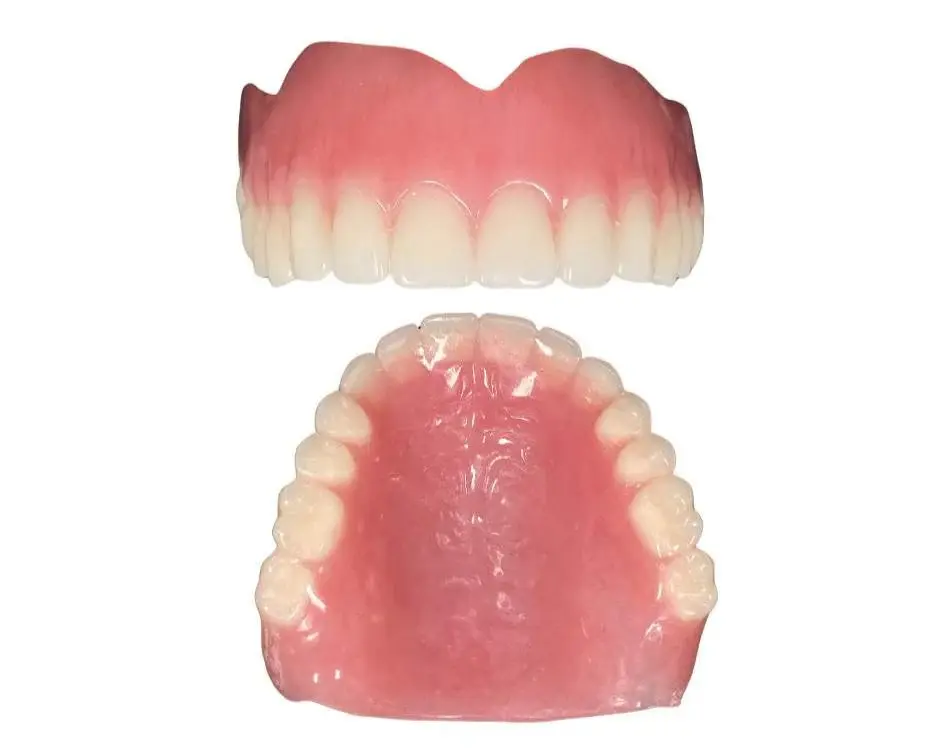
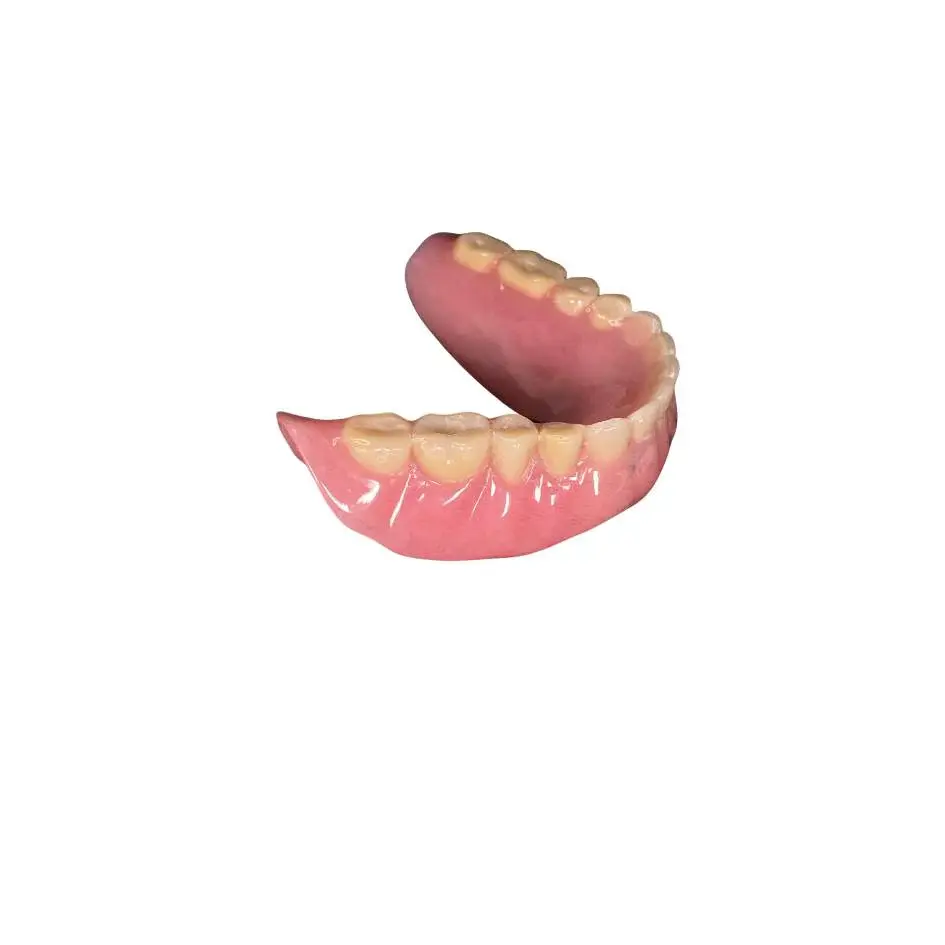
What are Full Dentures?
A full denture (also known as complete denture) is a dental prosthesis used to replace all the natural teeth in either the upper or lower jaw, or both. Full dentures help restore oral function, improve appearance, and enable patients to chew and speak properly.
When Full Dentures Are Needed
Complete Tooth Loss
All natural teeth in upper or lower arch have been lost or require extraction.
Severe Decay
Remaining teeth are too compromised to save and full extraction is recommended.
Gum Disease
Advanced periodontal disease has led to tooth loss throughout the arch.
Aesthetic Restoration
Restore facial appearance and smile after complete tooth loss.
Types of Full Dentures
Acrylic Resin Dentures
Made entirely from acrylic resin. Pink acrylic base mimics gum tissue with acrylic or plastic teeth. Most common and cost-effective type.
- Affordable — generally less expensive
- Adjustable — easier to adjust and repair
- Aesthetic — can be color-matched to gums
- Less durable — may wear out or crack over time
- Bulkier — may feel less comfortable
Metal-Based Dentures
Metal framework (cobalt-chromium or titanium) combined with acrylic teeth and gums. Metal provides structural support.
- Superior strength and resistance to breakage
- Thinner, more comfortable design
- Better stability and fit
- More expensive due to metal components
- Metal components may be visible
Flexible Dentures
Made from flexible thermoplastic materials such as nylon. More adaptable and comfortable, blending with gum color.
- Comfortable — adapts well to mouth changes
- Aesthetic — less visible, blends with gums
- Durable — resistant to fractures
- Harder to adjust or repair
- More expensive
Combination Dentures
Combine metal frameworks with acrylic or flexible materials. Metal for strength, flexible/acrylic for comfort and aesthetics.
- Balanced — strength, comfort, and aesthetics
- Customizable to patient needs
- More complex to fabricate
- More expensive due to combination of materials
Considerations for Choosing Full Dentures
Functional Needs
Assess needs for chewing, speaking, and overall oral function.
Aesthetic Preferences
Choose material that blends well with natural gum and tooth color.
Comfort and Fit
Ensure comfortable, secure fit minimizing discomfort or irritation.
Budget
Evaluate cost of different types and choose accordingly.
Full Denture Gallery
Full Denture — Upper
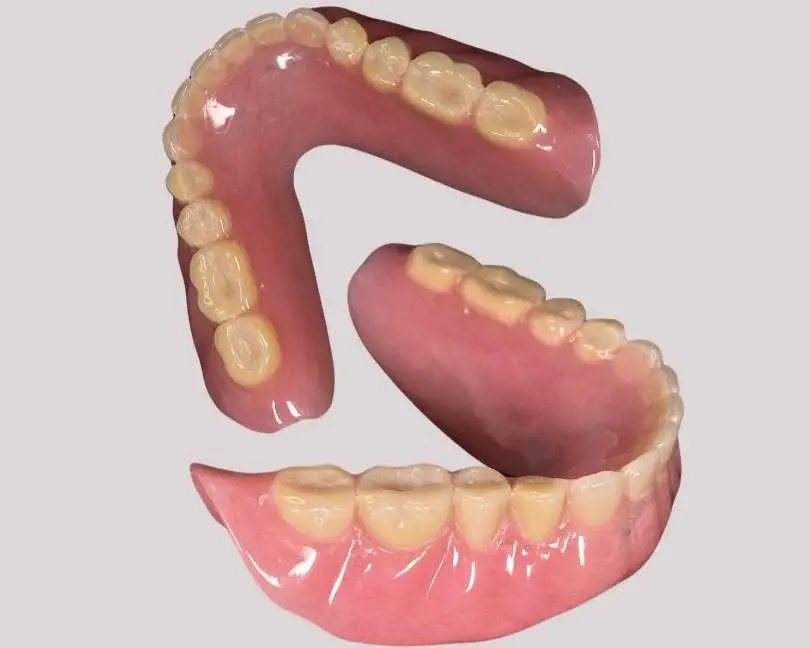
Full Denture — Lower